虛實
Weak Points and Strong
Shape the enemy, stay hard to read, and strike where resistance is thin.
Aliases
Weak Points and Strong / 虛實 / Art of War Chapter 6
Domains
Strategy, leadership, planning, deception, competition
Chapter Focus
- Shape the enemy, stay hard to read, and strike where resistance is thin.
- Alternate chapter title: Weak Points and Strong
- Chinese chapter title: 虛實
- This chapter is grouped into three contextual rule cards while preserving the full traditional Chinese text.
Set the Tempo
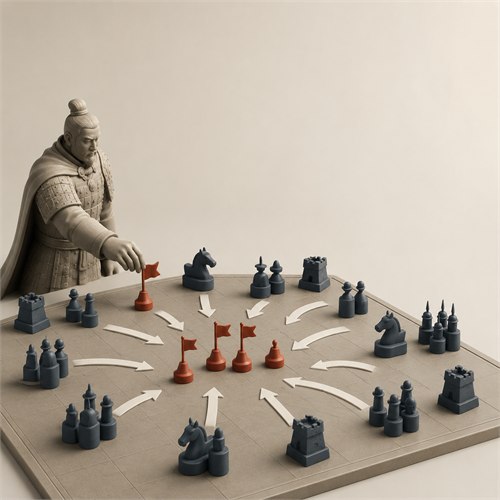
- Core idea: Make the other side respond to you; do not let them dictate your motion.
- Meaning: Set the tempo yourself.
- Why it matters: Whoever controls the agenda usually controls the pressure.
- How to apply: Publish your product roadmap cadence so competitors react to your timing instead of forcing yours.
Original Text Explanation
孫子曰:凡先處戰地而待敵者佚,後處戰地而趨戰者勞。Sun Zi says the force that reaches the battlefield first and waits is fresh; the one that arrives later and rushes to engage is worn out.故善戰者,致人而不致于人。So the skilled commander makes the enemy answer him and does not let the enemy dictate his motion.能使敵自至者,利之也﹔能使敵不得至者,害之也。He can draw the enemy in by offering gain, or keep him away by threatening loss.故敵佚能勞之,飽能飢之,安能動之。If the enemy is resting, wear him down; if he is fed, starve him; if he is settled, make him move.出其所不趨,趨其所不意。Appear where he must hurry to defend and move toward what he never expected you to approach.行千里而不勞者,行于無人之地也。A force can travel a thousand li without exhausting itself if it moves through ground where no enemy waits.攻而必取者,攻其所不守也。守而必固者,守其所不攻也。You take what you attack by striking what is not guarded, and you hold what you defend by securing what cannot readily be attacked.故善攻者,敵不知其所守。善守者,敵不知其所攻。A master attacker leaves the enemy unsure what to defend; a master defender leaves him unsure what to attack.微乎微乎,至于無形,神乎神乎,至于無聲,故能為敵之司命。Become so subtle that you leave no visible form and so quiet that you leave no audible trace; then you can hold the enemy's fate.進而不可御者,沖其虛也﹔退而不可追者,速而不可及也。Advance beyond stopping by driving into emptiness; withdraw beyond pursuit by moving faster than the enemy can follow.故我欲戰,敵雖高壘深溝,不得不與我戰者,攻其所必救也﹔If I want battle, even an enemy behind high walls and deep ditches can be forced out if I strike what he must rescue.我不欲戰,雖畫地而守之,敵不得與我戰者,乖其所之也。If I do not want battle, even a lightly marked position can keep him from engaging if I throw him off and spoil his path.
Strike Undefended Ground
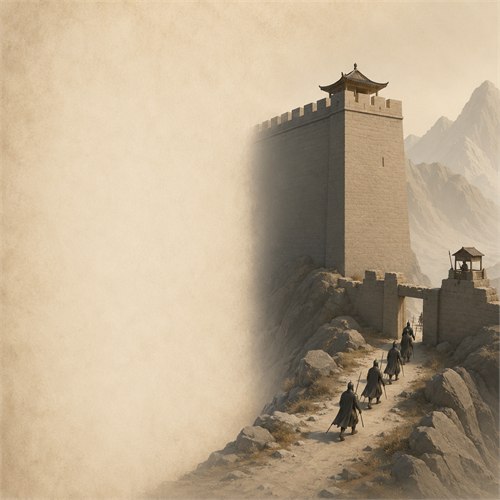
- Core idea: To take something successfully, strike where it is not defended.
- Meaning: Do not attack the strongest wall.
- Why it matters: The easiest entry point is usually somewhere the opponent does not expect to fight.
- How to apply: Enter a market through a neglected customer segment instead of challenging the incumbent in its flagship segment.
Original Text Explanation
故形人而我無形,則我專而敵分﹔If I can make the enemy show his shape while I keep none of my own, I stay concentrated and he must divide.我專為一,敵分為十,是以十攻其一也,則我眾而敵寡﹔If I remain one and force him into ten parts, then my many can fall on each of his few.能以眾擊寡者,則吾之所與戰者,約矣。When a larger force hits a smaller isolated part, the enemy is pressed hard.吾所與戰之地不可知,不可知,則敵所備者多,敵所備者多,則吾之所戰者,寡矣。If the place of battle is kept unknown, the enemy must prepare at many points, and each point becomes thinner.故備前則後寡,備後則前寡,故備左則右寡,備右則左寡,無所不備,則無所不寡。Strengthen the front and the rear thins; strengthen the rear and the front thins; guard left and right thins; guard right and left thins. Guard everything and everything is weak.寡者備人者也,眾者使人備己者也。Having too few comes from having to prepare against the enemy; having abundance comes from forcing him to prepare against you.故知戰之地,知戰之日,則可千里而會戰。If you know the place and day of battle, you can bring forces together from far away.不知戰之地,不知戰之日,則左不能救右,右不能救左,前不能救後,後不能救前,而況遠者數十里,近者數里乎?If you know neither place nor day, then left cannot rescue right, right cannot rescue left, front cannot rescue rear, and rear cannot rescue front, even when the distances are small.以吾度之,越人之兵雖多,亦奚益于勝敗哉?故曰:勝可為也。By my estimate, even if Yue has more troops, that alone adds nothing to their chances of victory.敵雖眾,可使無鬥。故策之而知得失之計,Even when the enemy is numerically greater, he can be kept from fighting. Probe him and learn what his plans gain or lose.作之而知動靜之理,形之而知死生之地,Stir him and learn how he moves or stays still; show yourself and learn what ground means life or death for him.角之而知有餘不足之處。Test him against yourself so you can see where he has excess and where he falls short.故形兵之極,至于無形﹔無形,則深間不能窺,智者不能謀。The highest form of deployment reaches formlessness. When no form is visible, even deep spies cannot pry and wise minds cannot scheme against it.因形而錯勝于眾,眾不能知﹔Victory can be shaped out of the enemy's own dispositions, yet the crowd does not understand how it was made.人皆知我所以勝之形,而莫知吾所以制勝之形。People can see the visible methods by which I win, but they do not see the deeper shape from which victory was formed.故其戰勝不復,而應形于無窮。So do not repeat the same winning method; let your responses change without limit according to circumstances.
Be Like Water
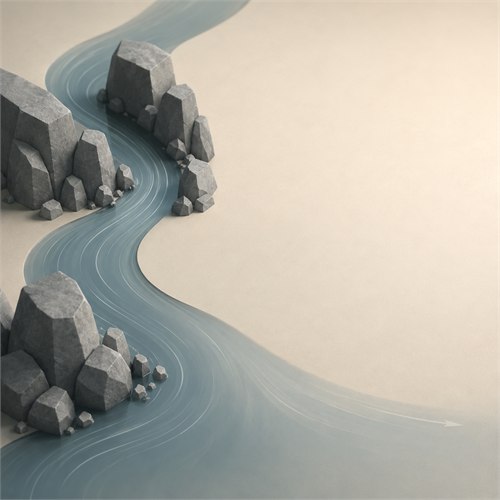
- Core idea: Military force should be like water, avoiding solidity and hitting emptiness.
- Meaning: Flow around strength and toward weakness.
- Why it matters: Strategy works best when it follows the path of least resistance.
- How to apply: Reposition the offer toward unmet demand instead of matching a bigger rival feature for feature.
Original Text Explanation
夫兵形象水,水之形避高而趨下,The shape of an army should resemble water: water turns away from heights and runs downward.兵之形,避實而擊虛,So in war, avoid what is solid and hit what is empty.水因地而制流,兵應敵而制勝。Water adjusts its flow to the ground; an army shapes its victory to the enemy.故兵無常勢,水無常形,Just as water has no fixed shape, war has no fixed pattern.能因敵變化而取勝者,謂之神。Whoever can change with the enemy and still win deserves to be called almost divine.故五行無常,勝四時無常位,日有短長,月有死生。The five elements do not rule in the same way forever, the four seasons trade places, days grow long and short, and the moon waxes and wanes.
