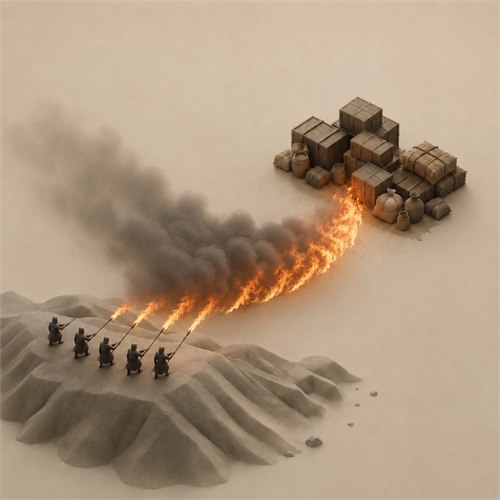
火攻
The Attack by Fire
Use special means only when conditions are right, and never let emotion control escalation.
Aliases
The Attack by Fire / 火攻 / Art of War Chapter 12
Domains
Strategy, leadership, planning, deception, competition
Chapter Focus
- Use special means only when conditions are right, and never let emotion control escalation.
- Alternate chapter title: The Attack by Fire
- Chinese chapter title: 火攻
- This chapter is grouped into three contextual rule cards while preserving the full traditional Chinese text.
Five Forms of Fire Attack
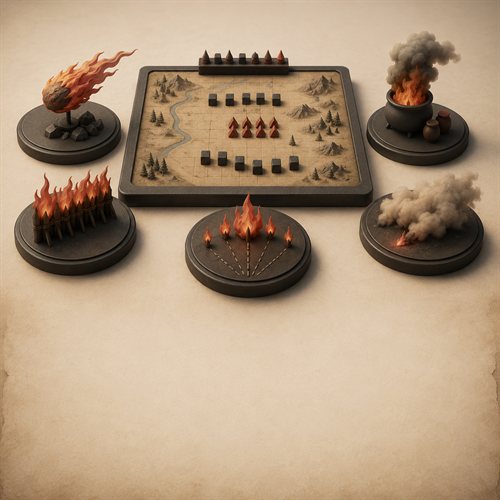
- Core idea: There are five ways to attack with fire.
- Meaning: Specialized tactics need classification and discipline.
- Why it matters: Do not use powerful tools vaguely; know the exact method and effect.
- How to apply: Separate disruption tactics into categories: price attack, narrative attack, channel attack, timing attack, and capability attack.
Original Text Explanation
孫子曰:凡火攻有五:一曰火人,二曰火積,三曰火輜,四曰火庫,五曰火隊。Sun Zi says there are five ways to attack with fire: burn personnel, burn stores, burn transport, burn depots, and cast fire into enemy formations.行火必有因,煙火必素具。To carry out such an attack, the necessary means must already be prepared. Fire-starting materials should always be kept ready.發火有時,起火有日。There is a right season for fire attack and specific days suited to igniting it.時者,天之燥也。日者,月在萁、壁、翼、軫也。凡此四宿者,風起之日也。The right season is dry weather, and the right days are those associated with rising wind.凡火攻,必因五火之變而應之。Whenever you attack with fire, be ready for five possible developments.火發于內,則早應之于外。If fire starts inside the enemy camp, answer quickly with an attack from outside.火發而其兵靜者,待而勿攻。If fire breaks out but the enemy remains calm, wait and do not attack too soon.極其火力,可從而從之,不可從而止。When the flames reach full force, follow with attack if you can; if you cannot, hold your place.火可發于外,無待于內,以時發之。If fire can be launched from outside, do not wait for an internal outbreak. Strike at the favorable moment.火發上風,無攻下風。When you start a fire, stay to windward of it. Do not attack from the downwind side.晝風久,夜風止。A daytime wind tends to last, while a night wind often dies quickly.凡軍必知有五火之變,以數守之。So every army must understand the five fire developments, track the signs that matter, and wait for the proper time.
Use Tools with Judgment
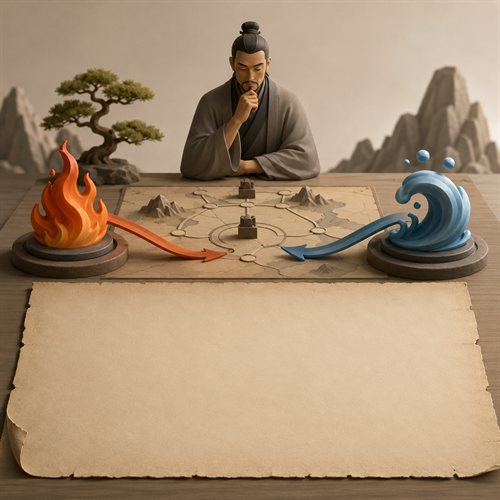
- Core idea: One who uses fire intelligently in attack shows clarity; one who uses water well gains force.
- Meaning: Tools amplify strategy when used with judgment.
- Why it matters: Means matter, but timing and intelligence matter more.
- How to apply: Use the right lever for the right moment instead of applying the same playbook everywhere.
Original Text Explanation
故以火佐攻者明,以水佐攻者強。Using fire to support attack shows clarity. Using water to support attack adds force.水可以絕,不可以奪。Water can cut the enemy off, but it cannot carry away everything he possesses.夫戰勝攻取,而不修其功者凶,命曰“費留”。If battles are won and objectives seized yet the advantage is not consolidated, the result is waste and stagnation.故曰:明主慮之,良將修之。So the enlightened ruler plans ahead, and the capable general prepares the means in advance.
Move Only for Advantage
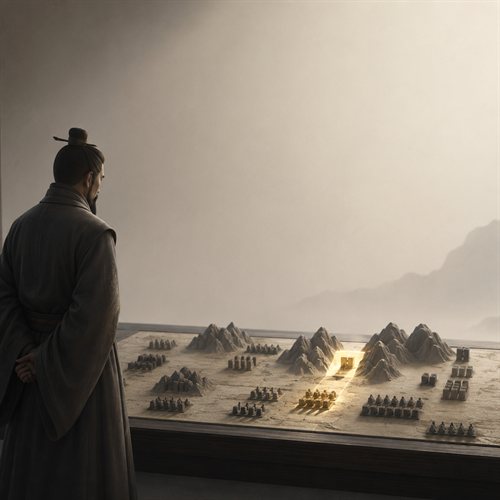
- Core idea: Do not move without advantage, do not act without gain, do not fight unless necessary.
- Meaning: Escalation must be justified.
- Why it matters: Pride is a terrible decision rule.
- How to apply: Do not start a public conflict unless the likely upside clearly exceeds the cost.
Original Text Explanation
非利不動,非得不用,非危不戰。Do not move unless advantage is present. Do not use force unless there is gain. Do not fight unless the position is truly critical.主不可以怒而興師,將不可以慍而致戰。A ruler must not raise troops out of anger, and a general must not go to battle out of resentment.合于利而動,不合于利而止。If action serves your advantage, move. If it does not, stop.怒可以復喜,慍可以復悅,Anger can cool and resentment can pass.亡國不可以復存,死者不可以復生。But a ruined state does not come back, and the dead do not return to life.故明君慎之,良將警之。此安國全軍之道也。That is why the clear-sighted ruler stays cautious and the good general stays watchful. This is how a state remains secure and an army remains intact.
