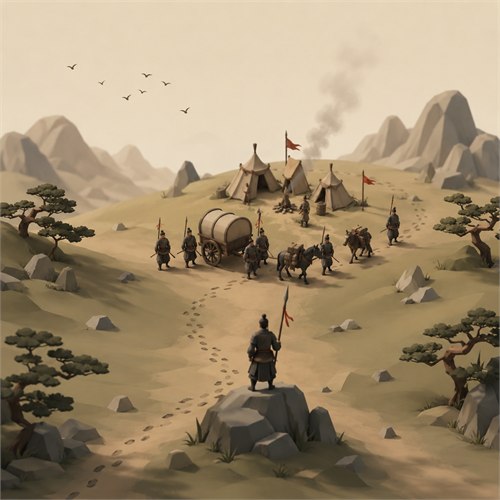
行军
Het leger op marsen
Observeer terrein, observeer signalen, observeer moreel. Observatie zelf is strategie.
Aliassen
Het leger op marsen / 《The Art of War · 行军》
Domeinen
strategie, leiderschap, planning, misleiding, concurrentie
Essentie van het hoofdstuk
- Observeer terrein, observeer signalen, observeer moreel. Observatie zelf is strategie.
- Andere hoofdstuknaam: Het leger op marsen
- Chinese hoofdstuknaam: 行军
- Deze pagina behandelt drie geselecteerde kernpunten uit hetzelfde hoofdstuk.
Punt 9.1
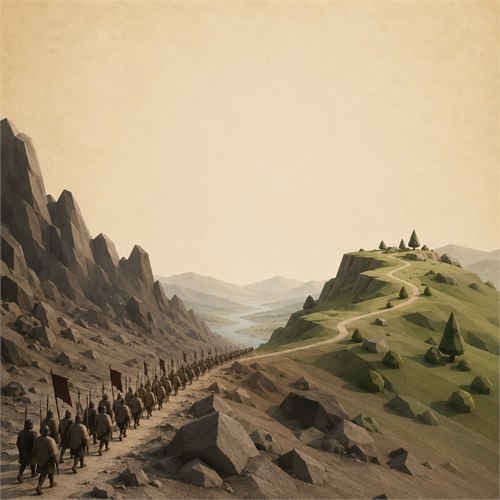
- Kernidee: Blijf bij het oversteken van bergen dicht bij valleien; kampeer op hoge grond met het gezicht naar de zon.
- Betekenis: Kies posities die je ondersteunen.
- Waarom het belangrijk is: Logistiek en duurzaamheid zijn net zo belangrijk als moed.
- Hoe je het toepast: Plaats het team waar communicatie, coördinatie en herstel het makkelijkst zijn, niet alleen waar het indrukwekkend lijkt.
Uitleg van de oorspronkelijke tekst
孫子曰:凡處軍、相敵,絕山依谷,Sun Zi richt zich nu op hoe een leger moet kamperen en hoe de tekenen van de vijand te lezen. Steek bergen snel over en blijf dicht bij valleien.視生處高,戰隆無登,此處山之軍也。Kampeer op hoog, zonnig terrein en klim niet de heuvel op om te vechten. Dat is de regel voor bergen.絕水必遠水﹔Nadat je een rivier bent overgestoken, breng afstand tussen jezelf en het water.客絕水而來,勿迎之于水內,令半濟而擊之,利﹔Wanneer een indringende kracht een rivier oversteekt, ontmoet hem dan niet midden in de stroom. Laat een deel oversteken en val dan aan.欲戰者,無附于水而迎客﹔Als je wilt strijden, ga de indringer dan niet begroeten bij de rivier die hij moet doorwaden.視生處高,無迎水流,此處水上之軍也。Houd je boten stroomopwaarts en aan de zonnige kant. Beweeg niet stroomopwaarts om de vijand te ontmoeten. Dat is de regel voor rivieren.絕斥澤,惟亟去無留﹔Bij het oversteken van moerasgebied is je eerste zorg om er snel doorheen te gaan zonder te blijven hangen.若交軍于斥澤之中,必依水草,而背眾樹,此處斥澤之軍也。Als je in het moeras moet vechten, houd water en gras dicht bij je en bomen achter je. Dat is de regel voor moerassen.平陸處易,而右背高,前死後生,此處平陸之軍也。Op droog, vlak terrein, kies een toegankelijke positie met oplopend land aan je rechterkant en achter je, gevaar vóór en veiligheid achter je. Dat is de regel voor vlak land.凡此四軍之利,黃帝之所以勝四帝也。Dit zijn vier nuttige takken van militaire kennis, en ze hielpen de Gele Keizer meerdere heersers te overwinnen.凡軍好高而惡下,貴陽而賤陰,Legers geven de voorkeur aan hoog boven laag en zonlicht boven schaduw.養生而處實,軍無百疾,是謂必勝。Als je voor de soldaten zorgt en op stevig terrein kampeert, vermijdt het leger ziekte, en dat helpt bij het behalen van overwinning.丘陵堤防,必處其陽,而右背之。此兵之利,地之助也。Wanneer je bij een heuvel of dijk komt, houd de zonnige kant met de helling aan je rechterachter. Dat is gunstig voor de troepen en benut het land goed.上雨,水沫至,欲涉者,待其定也。Als zware regen stroomopwaarts een rivier heeft doen aanzwellen en gevuld met schuim is, wacht dan tot het kalmeert voordat je oversteekt.凡地有絕澗、天井、天牢、天羅、天陷、天隙,必亟去之,勿近也。Blijf uit de buurt van steile kliffen, snelstromend water tussen rotsen, diepe dalen, smalle doorgangen, dicht struikgewas, moerassen en spleten.吾遠之,敵近之﹔吾迎之,敵背之。We moeten zulke plaatsen vermijden en de vijand ze laten naderen; als we ze tegenkomen, moeten we ze achter hem laten.軍旁有險阻、潢井、葭葦、林木、蘙薈者,必謹慎復索之,此伏奸之所處也。Als er nabijgelegen heuvels, met riet gevulde dalen, grasrijke vijvers of dichte bossen zijn, doorzoek ze dan zorgvuldig, want hinderlagen en verborgen spionnen verkiezen zulke plaatsen.
Punt 9.2
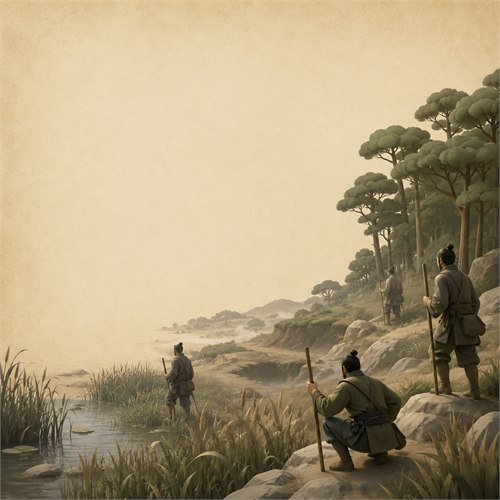
- Kernidee: Wanneer er ravijnen, poelen, riet, bossen of dichte begroeiing in de buurt van het leger zijn, doorzoek deze altijd grondig en herhaaldelijk.
- Betekenis: Let op plaatsen waar verrassingen zich kunnen verschuilen.
- Waarom het belangrijk is: Risico schuilt vaak in over het hoofd gezien details.
- Hoe je het toepast: Controleer obscure afhankelijkheden, omleidingssystemen en leveranciersrechten, niet alleen het zichtbare front-endproduct.
Uitleg van de oorspronkelijke tekst
敵近而靜者,恃其險也﹔Als de vijand dichtbij en stil is, vertrouwt hij op de natuurlijke kracht van zijn positie.遠而挑戰者,欲人之進也﹔Als hij achterblijft maar blijft proberen een gevecht uit te lokken, wil hij dat jij naar voren komt.其所居易者,利也。Als zijn kamp makkelijk te benaderen is, biedt hij lokaas aan.眾樹動者,來也﹔眾草多障者,疑也﹔Beweging door de bomen laat zien dat de vijand oprukt. Kunstmatige schermen of drukte in hoog gras suggereren dat hij ons achterdochtig wil maken.鳥起者,伏也﹔獸駭者,覆也﹔Vogels die plotseling opkomen markeren een hinderlaag. Bange dieren wijzen op een aanval die snel nadert.塵高而銳者,車來也﹔卑而廣者,徒來也﹔散而條達者,樵采也﹔少而往來者,營軍也。Een hoge stofkolom betekent strijdwagens; lage verspreide stof betekent infanterie; stof verspreid in takken betekent houtverzamelpartijen; Kleine bewegende stofwolken betekenen dat het leger kamp opslaat.辭卑而備者,進也﹔辭強而進驅者,退也﹔Bescheiden praten gecombineerd met extra voorbereiding betekent dat de vijand op het punt staat op te rukken. Gewelddadige taal en een luidruchtige aanval zorgen er vaak voor dat hij van plan is zich terug te trekken.輕車先出其側者,陣也﹔Wanneer lichte strijdwagens eerst op de vleugels worden opgesteld, vormt de vijand zich voor de strijd.無約而請和者,謀也﹔Gesprek over vrede zonder bindende voorwaarden duidt op een plan.奔走而陳兵者,期也﹔Als mannen rondrennen en dan in rang vallen, is het kritieke moment nabij.半進半退者,誘也。Als sommige troepen oprukken terwijl anderen zich terugtrekken, is dat een lokmiddel.杖而立者,飢也﹔Wanneer soldaten op hun speren steunen, worden ze verzwakt door honger.汲而先飲者,渴也﹔Als waterdragers zelf eerst drinken, heeft het leger dorst.見利而不進者,勞也﹔Als de vijand voordeel ziet en het niet benut, zijn zijn mannen uitgeput.鳥集者,虛也﹔夜呼者,恐也﹔Als vogels zich op een plek vestigen, bewoont niemand die plek. Het lawaai in het kamp 's nachts toont zenuwen.軍擾者,將不重也﹔旌旗動者,亂也﹔吏怒者,倦也﹔Als het kamp onrustig is, is de autoriteit van de generaal zwak. Als banners en vlaggen chaotisch bewegen, neemt de wanorde toe. Als agenten boos zijn, zijn de mannen uitgeput.粟馬肉食,軍無懸缶而不返其舍者,窮寇也﹔Wanneer een leger graan aan zijn paarden voert, vee doodt voor voedsel, en kookpotten van het vuur laat vallen alsof het niet terug wil keren naar het kamp, is het klaar om tot de dood te vechten.諄諄翕翕,徐與人言者,失眾也﹔Mannen die in kleine groepjes fluisterden en zachtjes spraken, tonen ontevredenheid binnen de gelederen.數賞者,窘也﹔數罰者,困也﹔Te veel beloningen betekenen dat de middelen van de vijand bijna uitgeput zijn. Te veel straffen betekenen ernstig lijden.先暴而後畏其眾者,不精之至也﹔Eerst bluffen en dan bang zijn voor de aantallen van de vijand is een teken van slechte oordeelsvorming.來委謝者,欲休息也。Afgezanten die vol complimenten aankomen, geven meestal een wens voor wapenstilstand aan.兵怒而相迎,久而不合,又不相去,必謹察之。Als vijandelijke troepen boos naderen en langdurig tegenover de onze blijven staan zonder te vechten of zich terug te trekken, vraagt de situatie om grote voorzichtigheid.
Punt 9.3
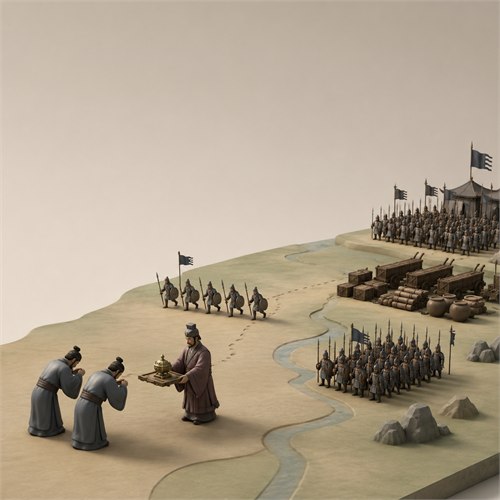
- Kernidee: Bescheiden woorden terwijl de voorbereidingen toenemen, duiden op een opmars; ongevraagde vredesvoorstellen duiden op een complot; half opmarcheren en half terugtrekken duidt op een lokaas.
- Betekenis: Gedrag onthult intentie betrouwbaarder dan woorden.
- Waarom het belangrijk is: Let op gedragspatronen, niet op verklaarde standpunten.
- Hoe je het toepast: Wanneer de toon van een rivaal plotseling vriendelijker wordt terwijl ze hun kanalen versterken, ga ervan uit dat ze zich voorbereiden om te bewegen.
Uitleg van de oorspronkelijke tekst
兵非貴益多也,惟無武進,足以并力、料敵、取人而已。Als onze troepen niet talrijker zijn dan die van de vijand, is dat nog steeds genoeg. Het betekent alleen dat we een directe frontale aanval moeten vermijden, de kracht moeten concentreren, zorgvuldig moeten observeren en versterking moeten zoeken.夫惟無慮而易敵者,必擒于人。Iedereen die zijn tegenstanders onderschat en niets van tevoren plant, zal zeker door hen gevangen worden genomen.卒未親附而罰之,則不服,不服則難用也。卒已親附而罰不行,則不可用也。Als soldaten gestraft worden voordat ze je vertrouwen, zullen ze zich niet onderwerpen. Als ze je vertrouwen maar de straf wordt nooit uitgevoerd, zijn ze nog steeds nutteloos.故令之以文,齊之以武,是謂必取。Begin dus met menselijkheid, maar behoud controle met stevige discipline. Dat is een betrouwbare weg naar overwinning.令素行以教其民,則民服﹔令素不行以教其民,則民不服。Als bevelen consequent worden uitgevoerd tijdens de training, wordt het leger gedisciplineerd. Zo niet, dan vervalt de discipline.令素行者,與眾相得也。Als een generaal zijn mannen vertrouwt en toch op gehoorzaamheid aandringt, profiteren beide partijen.
